
Why Some Wounds Won’t Heal: Causes and Advanced Treatment Options
Why Some Wounds Won’t Heal: Causes and Advanced Treatment Options
- March 9, 2026
- By LA Wound Care
- 198
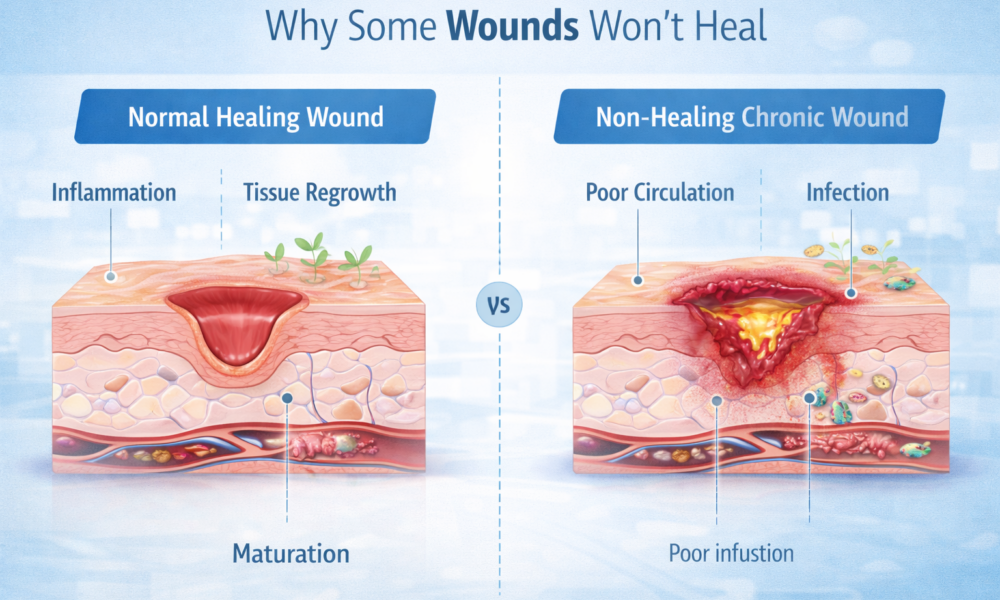
Most minor cuts and injuries heal within a few days or weeks with proper care. However, some wounds take much longer to heal and may even worsen over time. These are known as chronic wounds, and they can pose serious health risks if left untreated.
For patients in Los Angeles, non-healing wounds are often linked to underlying health conditions such as diabetes, poor circulation, or infection. Understanding why certain wounds fail to heal is an important step toward receiving the right treatment and preventing complications.
At LA Wound Care, specialists focus on diagnosing the underlying causes of chronic wounds and providing advanced treatments that promote faster and more effective healing.
What Is a Chronic Wound?
A chronic wound is a wound that does not heal within the normal timeframe. While most wounds heal within two to four weeks, a chronic wound may remain open or worsen for several months.
These wounds may repeatedly reopen or fail to progress through the normal stages of healing. Without proper medical care, chronic wounds can lead to infection, tissue damage, and other serious complications.
Common types of chronic wounds include:
-
- Diabetic foot ulcers
-
- Venous leg ulcers
-
- Pressure ulcers (bedsores)
-
- Arterial ulcers
-
- Non-healing surgical wounds
These wounds require specialized care because they often involve underlying medical conditions that interfere with the body’s natural healing process.
Common Causes of Non-Healing Wounds
Several factors can prevent wounds from healing properly. Identifying the root cause is essential for developing an effective treatment plan.
Poor Circulation
Healthy blood flow is essential for wound healing because it delivers oxygen and nutrients to damaged tissue. When circulation is reduced, the body struggles to repair the affected area.
Conditions such as Peripheral Artery Disease (PAD) or other vascular problems can significantly slow the healing process.
Diabetes
Diabetes is one of the most common causes of chronic wounds. High blood sugar levels can damage blood vessels and nerves, reducing circulation and sensation in the feet.
As a result, small injuries may go unnoticed and gradually develop into larger wounds that are difficult to heal.
Infection
Bacterial infections can significantly delay wound healing. When bacteria enter a wound, the body must focus on fighting infection before repairing damaged tissue.
Signs of infection may include:
-
- Redness and swelling
-
- Warmth around the wound
-
- Drainage or pus
-
- Increased pain
-
- Fever in severe cases
Prompt medical treatment is essential to prevent infections from spreading.
Pressure and Repeated Trauma
Wounds can also fail to heal when there is constant pressure or friction on the affected area. This is common in individuals who spend long periods sitting or lying down, which can lead to pressure ulcers.
Repeated trauma to the wound site can prevent tissue from recovering properly.
Poor Nutrition
The body requires essential nutrients such as protein, vitamins, and minerals to repair damaged tissue. Poor nutrition can weaken the immune system and slow the healing process.
Patients recovering from chronic wounds may benefit from improved nutritional support as part of their treatment plan.
Signs That a Wound May Not Be Healing Properly
It is important to monitor wounds closely for signs that they are not healing as expected. Early medical attention can prevent complications and improve recovery outcomes.
Warning signs of a non-healing wound include:
-
- The wound remains open for several weeks
-
- Increased redness or swelling
-
- Persistent drainage or odor
-
- Dark or discolored tissue
-
- Pain that worsens over time
If any of these symptoms occur, it is important to seek evaluation from a wound care specialist.
Advanced Treatments for Chronic Wounds
Modern wound care has advanced significantly in recent years. Specialists now have access to innovative treatments that help stimulate healing and reduce the risk of complications.
At LA Wound Care, treatment plans are tailored to each patient’s specific condition.
Debridement
Debridement is a procedure that removes dead or infected tissue from the wound. This helps healthy tissue grow and improves the body’s ability to heal the affected area.
Advanced Wound Dressings
Specialized dressings can help maintain the ideal moisture balance for healing. These dressings also protect the wound from bacteria and external contaminants.
Negative Pressure Wound Therapy
Negative pressure therapy uses a controlled suction system to remove excess fluid from the wound and improve blood flow to the area. This technique can significantly accelerate healing for certain chronic wounds.
Infection Management
If infection is present, doctors may prescribe antibiotics or antimicrobial treatments to control bacteria and support recovery.
Circulation Improvement
When poor circulation is the underlying cause, specialists may recommend treatments designed to restore healthy blood flow to the affected area.
Preventing Chronic Wounds
Although not all wounds can be prevented, there are several steps patients can take to reduce their risk.
Some important prevention strategies include:
-
- Keeping wounds clean and properly dressed
-
- Managing chronic conditions such as diabetes
-
- Wearing properly fitted footwear
-
- Avoiding prolonged pressure on certain areas of the body
-
- Maintaining a balanced diet to support healing
Regular medical checkups can also help detect circulation problems or other conditions that may increase the risk of chronic wounds.
When to See a Wound Care Specialist
Many people attempt to treat wounds at home, but certain injuries require professional medical attention.
Patients should consider visiting a wound care specialist if:
-
- A wound does not improve after two weeks
-
- Signs of infection appear
-
- The wound becomes increasingly painful
-
- There is significant swelling or discoloration
-
- The wound occurs in a patient with diabetes or circulation problems
Early intervention can prevent complications and significantly improve healing outcomes.
Advanced Wound Care Treatment in Los Angeles
At LA Wound Care, specialists focus on identifying the root causes of chronic wounds and providing advanced treatment solutions. By combining modern medical technology with personalized care, patients receive comprehensive treatment designed to promote faster healing.
Chronic wounds should never be ignored. With early diagnosis and proper care, many non-healing wounds can be successfully treated, allowing patients to regain comfort and improve their quality of life.
Why Some Wounds Won’t Heal: Causes and Advanced Treatment Options
Most minor cuts and injuries heal within a few days or weeks with proper care. However, some wounds take much longer to heal and may even worsen over time. These are known as chronic wounds, and they can pose serious health risks if left untreated.
For patients in Los Angeles, non-healing wounds are often linked to underlying health conditions such as diabetes, poor circulation, or infection. Understanding why certain wounds fail to heal is an important step toward receiving the right treatment and preventing complications.
At LA Wound Care, specialists focus on diagnosing the underlying causes of chronic wounds and providing advanced treatments that promote faster and more effective healing.
What Is a Chronic Wound?
A chronic wound is a wound that does not heal within the normal timeframe. While most wounds heal within two to four weeks, a chronic wound may remain open or worsen for several months.
These wounds may repeatedly reopen or fail to progress through the normal stages of healing. Without proper medical care, chronic wounds can lead to infection, tissue damage, and other serious complications.
Common types of chronic wounds include:
-
- Diabetic foot ulcers
-
- Venous leg ulcers
-
- Pressure ulcers (bedsores)
-
- Arterial ulcers
-
- Non-healing surgical wounds
These wounds require specialized care because they often involve underlying medical conditions that interfere with the body’s natural healing process.
Common Causes of Non-Healing Wounds
Several factors can prevent wounds from healing properly. Identifying the root cause is essential for developing an effective treatment plan.
Poor Circulation
Healthy blood flow is essential for wound healing because it delivers oxygen and nutrients to damaged tissue. When circulation is reduced, the body struggles to repair the affected area.
Conditions such as Peripheral Artery Disease (PAD) or other vascular problems can significantly slow the healing process.
Diabetes
Diabetes is one of the most common causes of chronic wounds. High blood sugar levels can damage blood vessels and nerves, reducing circulation and sensation in the feet.
As a result, small injuries may go unnoticed and gradually develop into larger wounds that are difficult to heal.
Infection
Bacterial infections can significantly delay wound healing. When bacteria enter a wound, the body must focus on fighting infection before repairing damaged tissue.
Signs of infection may include:
-
- Redness and swelling
-
- Warmth around the wound
-
- Drainage or pus
-
- Increased pain
-
- Fever in severe cases
Prompt medical treatment is essential to prevent infections from spreading.
Pressure and Repeated Trauma
Wounds can also fail to heal when there is constant pressure or friction on the affected area. This is common in individuals who spend long periods sitting or lying down, which can lead to pressure ulcers.
Repeated trauma to the wound site can prevent tissue from recovering properly.
Poor Nutrition
The body requires essential nutrients such as protein, vitamins, and minerals to repair damaged tissue. Poor nutrition can weaken the immune system and slow the healing process.
Patients recovering from chronic wounds may benefit from improved nutritional support as part of their treatment plan.
Signs That a Wound May Not Be Healing Properly
It is important to monitor wounds closely for signs that they are not healing as expected. Early medical attention can prevent complications and improve recovery outcomes.
Warning signs of a non-healing wound include:
-
- The wound remains open for several weeks
-
- Increased redness or swelling
-
- Persistent drainage or odor
-
- Dark or discolored tissue
-
- Pain that worsens over time
If any of these symptoms occur, it is important to seek evaluation from a wound care specialist.
Advanced Treatments for Chronic Wounds
Modern wound care has advanced significantly in recent years. Specialists now have access to innovative treatments that help stimulate healing and reduce the risk of complications.
At LA Wound Care, treatment plans are tailored to each patient’s specific condition.
Debridement
Debridement is a procedure that removes dead or infected tissue from the wound. This helps healthy tissue grow and improves the body’s ability to heal the affected area.
Advanced Wound Dressings
Specialized dressings can help maintain the ideal moisture balance for healing. These dressings also protect the wound from bacteria and external contaminants.
Negative Pressure Wound Therapy
Negative pressure therapy uses a controlled suction system to remove excess fluid from the wound and improve blood flow to the area. This technique can significantly accelerate healing for certain chronic wounds.
Infection Management
If infection is present, doctors may prescribe antibiotics or antimicrobial treatments to control bacteria and support recovery.
Circulation Improvement
When poor circulation is the underlying cause, specialists may recommend treatments designed to restore healthy blood flow to the affected area.
Preventing Chronic Wounds
Although not all wounds can be prevented, there are several steps patients can take to reduce their risk.
Some important prevention strategies include:
-
- Keeping wounds clean and properly dressed
-
- Managing chronic conditions such as diabetes
-
- Wearing properly fitted footwear
-
- Avoiding prolonged pressure on certain areas of the body
-
- Maintaining a balanced diet to support healing
Regular medical checkups can also help detect circulation problems or other conditions that may increase the risk of chronic wounds.
When to See a Wound Care Specialist
Many people attempt to treat wounds at home, but certain injuries require professional medical attention.
Patients should consider visiting a wound care specialist if:
-
- A wound does not improve after two weeks
-
- Signs of infection appear
-
- The wound becomes increasingly painful
-
- There is significant swelling or discoloration
-
- The wound occurs in a patient with diabetes or circulation problems
Early intervention can prevent complications and significantly improve healing outcomes.
Advanced Wound Care Treatment in Los Angeles
At LA Wound Care, specialists focus on identifying the root causes of chronic wounds and providing advanced treatment solutions. By combining modern medical technology with personalized care, patients receive comprehensive treatment designed to promote faster healing.
Chronic wounds should never be ignored. With early diagnosis and proper care, many non-healing wounds can be successfully treated, allowing patients to regain comfort and improve their quality of life.
Why Some Wounds Won’t Heal: Causes and Advanced Treatment Options
Most minor cuts and injuries heal within a few days or weeks with proper care. However, some wounds take much longer to heal and may even worsen over time. These are known as chronic wounds, and they can pose serious health risks if left untreated.
For patients in Los Angeles, non-healing wounds are often linked to underlying health conditions such as diabetes, poor circulation, or infection. Understanding why certain wounds fail to heal is an important step toward receiving the right treatment and preventing complications.
At LA Wound Care, specialists focus on diagnosing the underlying causes of chronic wounds and providing advanced treatments that promote faster and more effective healing.
What Is a Chronic Wound?
A chronic wound is a wound that does not heal within the normal timeframe. While most wounds heal within two to four weeks, a chronic wound may remain open or worsen for several months.
These wounds may repeatedly reopen or fail to progress through the normal stages of healing. Without proper medical care, chronic wounds can lead to infection, tissue damage, and other serious complications.
Common types of chronic wounds include:
-
- Diabetic foot ulcers
-
- Venous leg ulcers
-
- Pressure ulcers (bedsores)
-
- Arterial ulcers
-
- Non-healing surgical wounds
These wounds require specialized care because they often involve underlying medical conditions that interfere with the body’s natural healing process.
Common Causes of Non-Healing Wounds
Several factors can prevent wounds from healing properly. Identifying the root cause is essential for developing an effective treatment plan.
Poor Circulation
Healthy blood flow is essential for wound healing because it delivers oxygen and nutrients to damaged tissue. When circulation is reduced, the body struggles to repair the affected area.
Conditions such as Peripheral Artery Disease (PAD) or other vascular problems can significantly slow the healing process.
Diabetes
Diabetes is one of the most common causes of chronic wounds. High blood sugar levels can damage blood vessels and nerves, reducing circulation and sensation in the feet.
As a result, small injuries may go unnoticed and gradually develop into larger wounds that are difficult to heal.
Infection
Bacterial infections can significantly delay wound healing. When bacteria enter a wound, the body must focus on fighting infection before repairing damaged tissue.
Signs of infection may include:
-
- Redness and swelling
-
- Warmth around the wound
-
- Drainage or pus
-
- Increased pain
-
- Fever in severe cases
Prompt medical treatment is essential to prevent infections from spreading.
Pressure and Repeated Trauma
Wounds can also fail to heal when there is constant pressure or friction on the affected area. This is common in individuals who spend long periods sitting or lying down, which can lead to pressure ulcers.
Repeated trauma to the wound site can prevent tissue from recovering properly.
Poor Nutrition
The body requires essential nutrients such as protein, vitamins, and minerals to repair damaged tissue. Poor nutrition can weaken the immune system and slow the healing process.
Patients recovering from chronic wounds may benefit from improved nutritional support as part of their treatment plan.
Signs That a Wound May Not Be Healing Properly
It is important to monitor wounds closely for signs that they are not healing as expected. Early medical attention can prevent complications and improve recovery outcomes.
Warning signs of a non-healing wound include:
-
- The wound remains open for several weeks
-
- Increased redness or swelling
-
- Persistent drainage or odor
-
- Dark or discolored tissue
-
- Pain that worsens over time
If any of these symptoms occur, it is important to seek evaluation from a wound care specialist.
Advanced Treatments for Chronic Wounds
Modern wound care has advanced significantly in recent years. Specialists now have access to innovative treatments that help stimulate healing and reduce the risk of complications.
At LA Wound Care, treatment plans are tailored to each patient’s specific condition.
Debridement
Debridement is a procedure that removes dead or infected tissue from the wound. This helps healthy tissue grow and improves the body’s ability to heal the affected area.
Advanced Wound Dressings
Specialized dressings can help maintain the ideal moisture balance for healing. These dressings also protect the wound from bacteria and external contaminants.
Negative Pressure Wound Therapy
Negative pressure therapy uses a controlled suction system to remove excess fluid from the wound and improve blood flow to the area. This technique can significantly accelerate healing for certain chronic wounds.
Infection Management
If infection is present, doctors may prescribe antibiotics or antimicrobial treatments to control bacteria and support recovery.
Circulation Improvement
When poor circulation is the underlying cause, specialists may recommend treatments designed to restore healthy blood flow to the affected area.
Preventing Chronic Wounds
Although not all wounds can be prevented, there are several steps patients can take to reduce their risk.
Some important prevention strategies include:
-
- Keeping wounds clean and properly dressed
-
- Managing chronic conditions such as diabetes
-
- Wearing properly fitted footwear
-
- Avoiding prolonged pressure on certain areas of the body
-
- Maintaining a balanced diet to support healing
Regular medical checkups can also help detect circulation problems or other conditions that may increase the risk of chronic wounds.
When to See a Wound Care Specialist
Many people attempt to treat wounds at home, but certain injuries require professional medical attention.
Patients should consider visiting a wound care specialist if:
-
- A wound does not improve after two weeks
-
- Signs of infection appear
-
- The wound becomes increasingly painful
-
- There is significant swelling or discoloration
-
- The wound occurs in a patient with diabetes or circulation problems
Early intervention can prevent complications and significantly improve healing outcomes.
Advanced Wound Care Treatment in Los Angeles
At LA Wound Care, specialists focus on identifying the root causes of chronic wounds and providing advanced treatment solutions. By combining modern medical technology with personalized care, patients receive comprehensive treatment designed to promote faster healing.
Chronic wounds should never be ignored. With early diagnosis and proper care, many non-healing wounds can be successfully treated, allowing patients to regain comfort and improve their quality of life.