


Diabetic Wound Healing Stages: 5 Essential Recovery Phases
Diabetic Wound Healing Stages: 5 Essential Recovery Phases
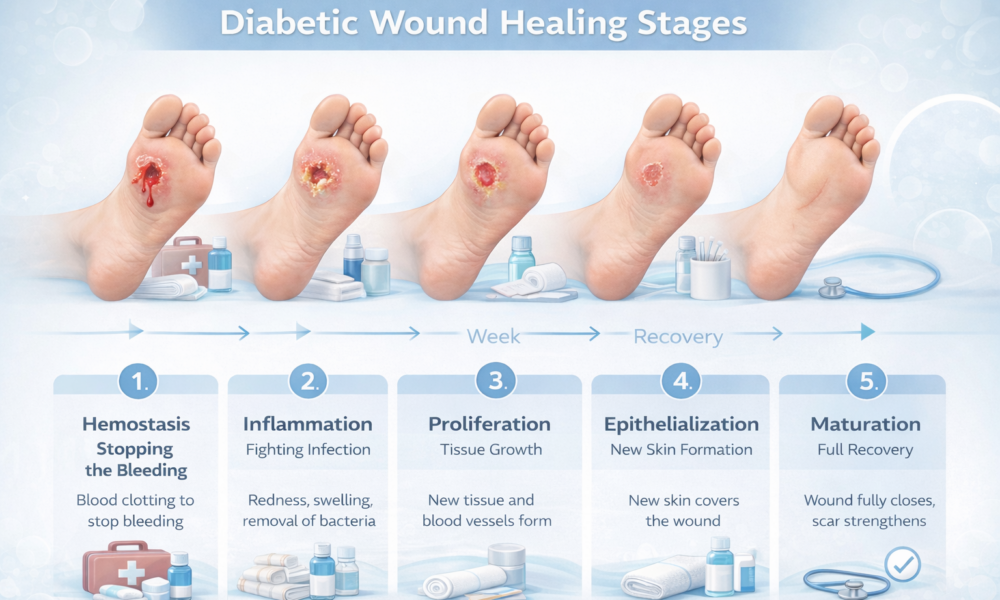
What Are Diabetic Wound Healing Stages?
The diabetic wound healing stages refer to the biological process your body goes through to repair damaged tissue. In patients with diabetes, this process is often slower due to poor circulation and nerve damage.
Understanding these stages is important because it helps patients recognize whether their wound is healing properly or showing signs of complications.
Why Healing Is Slower in Diabetic Patients
Healing delays are common in diabetes due to several factors. First, reduced blood flow limits oxygen and nutrients needed for repair. In addition, high blood sugar levels impair immune function.
As a result, even minor wounds can become non healing diabetic wounds if not treated properly.
According to the Centers for Disease Control and Prevention, proper wound care and early intervention significantly improve healing outcomes.
5 Important Diabetic Wound Healing Stages
1. Hemostasis (Stopping the Bleeding)
The first of the diabetic wound healing stages begins immediately after injury. The body works to stop bleeding by forming clots.
However, in diabetic patients, this process may take longer due to vascular complications.
2. Inflammation Phase
During this stage, the body fights bacteria and removes damaged tissue. You may notice redness and swelling.
While this is a normal part of the stages of diabetic wound healing, prolonged inflammation can indicate a problem.
3. Proliferation (Tissue Growth)
New tissue and blood vessels begin to form. This phase is crucial for closing the wound.
However, poor circulation can slow down this stage, especially in patients with underlying vascular conditions.
👉 Learn more about circulation issues: PAD Treatment Los Angeles
4. Epithelialization (Skin Formation)
New skin starts to cover the wound. This is a key milestone in how diabetic wounds heal.
At this point, proper wound care is essential to avoid reopening or infection.
5. Maturation (Final Healing Stage)
In the final stage of diabetic wound healing stages, the wound strengthens and fully closes. Scar tissue forms, and the skin regains stability.
This stage can take weeks to months depending on the severity of the wound.
What Causes Delayed Healing?
Several factors can disrupt the normal diabetic wound healing stages, including:
- Poor blood circulation
- Infection
- High blood sugar levels
- Continuous pressure on the wound
- Lack of proper medical care
If these issues are not addressed, wounds may become chronic and difficult to treat.
How to Improve Healing Outcomes
To support healthy diabetic wound healing stages, patients should follow these best practices:
- Seek early care from a specialist
- Maintain proper wound hygiene
- Use advanced wound care treatments like Ultramist therapy
- Control blood sugar levels
- Avoid pressure on the affected area
A diabetic wound care Los Angeles provider can offer personalized treatment plans to accelerate healing and prevent complications.
According to the National Institute of Diabetes and Digestive and Kidney Diseases, comprehensive care significantly improves recovery rates.